Sanofi UK has been running a series of LinkedIn ads highlighting the burden of RSV on the UK health system, focusing on case volume, cost, bed occupancy, and the resources required to care for patients. The campaign features a range of ads (we've included a couple below) showcasing different aspects of this burden and directing users to a website where they can explore the impact in their own local area. The website experience can be seen in the videos below. By moving beyond national data to highlight local insights, the campaign delivers a more relevant and impactful message.
Sanofi UK also share a range of posts to drive through to a
Politics Home article talking about this issue.
Sanofi UK ran a series of LinkedIn ads focused on highlighting the impact of COPD on specific regions of the UK, such as Manchester , Hull and Southampton. The ads link through to a
report 'Breathe Equal: Policy recommendations to reduce the burden of COPD'. Again here Sanofi focus on making ads relevant to the local area to drive more engagement.
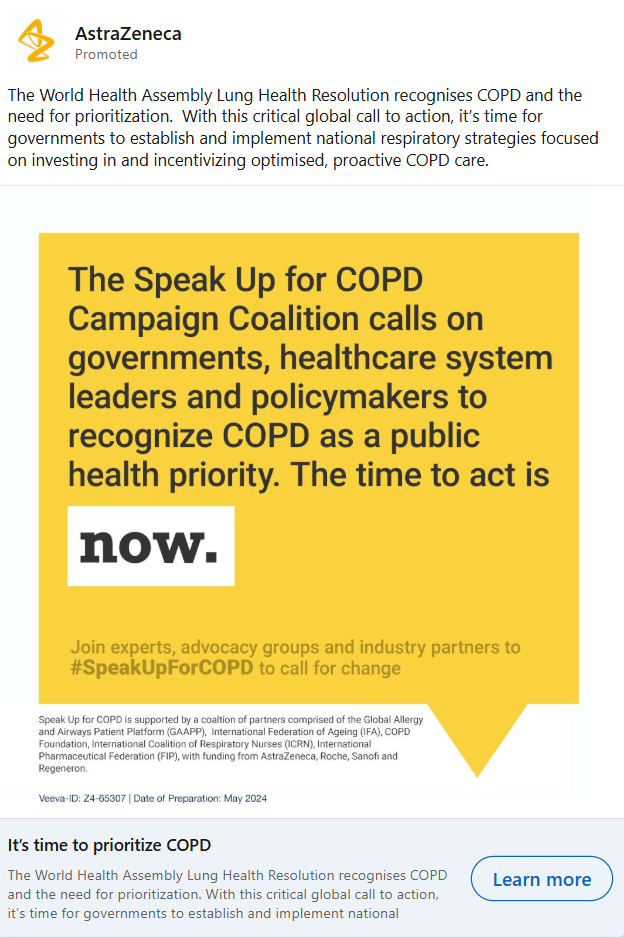
This example from AstraZeneca uses LinkedIn advertising to highlight an under-recognised disease, COPD. The social content raises awareness of the condition, gaps in care, and the impact on patients. Clicking through from a post takes users to a website with more detail on the suggested policy reforms and invites them to support a virtual pledge. The pledge helps demonstrate community interest and build social pressure for change.
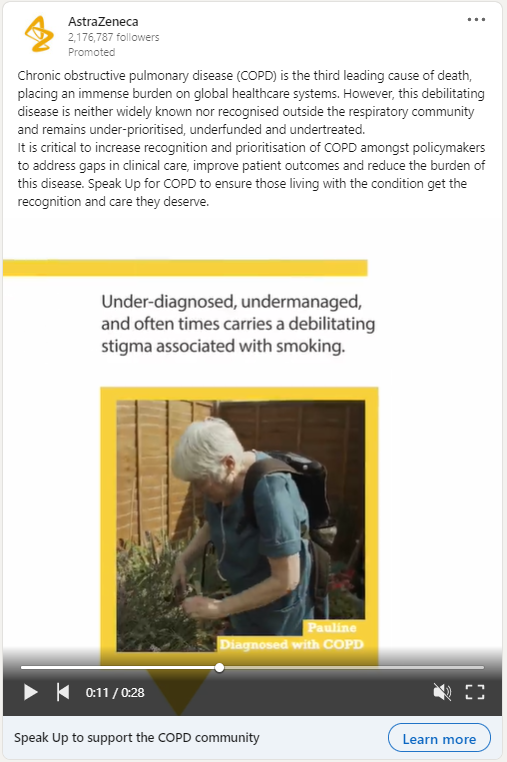
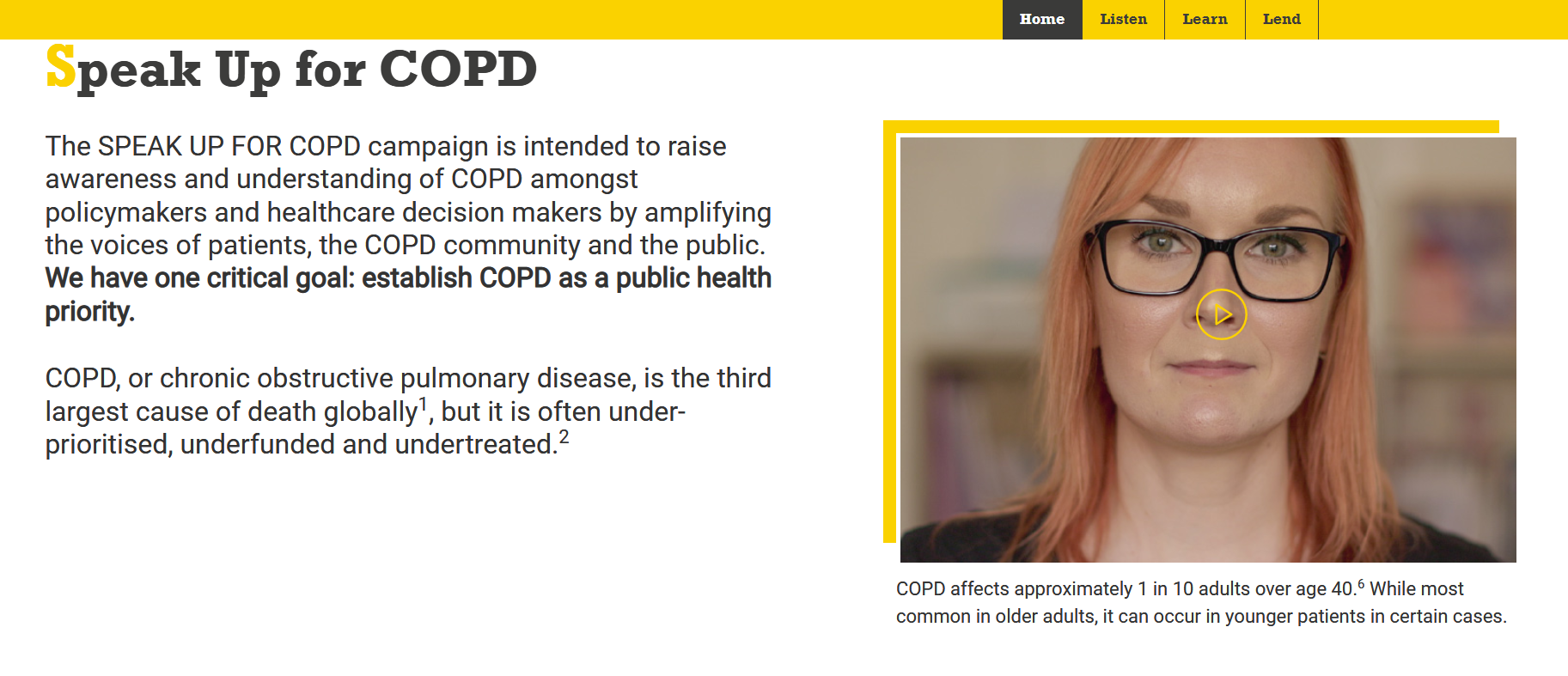
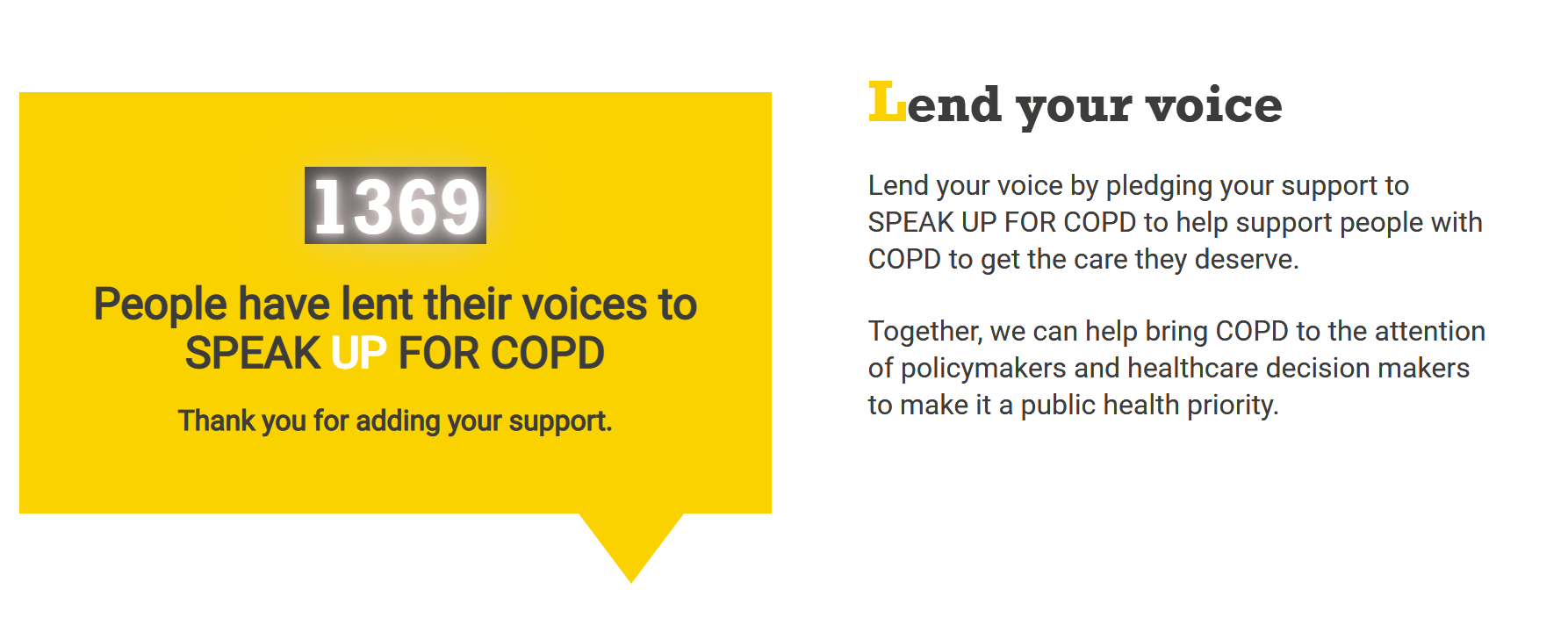
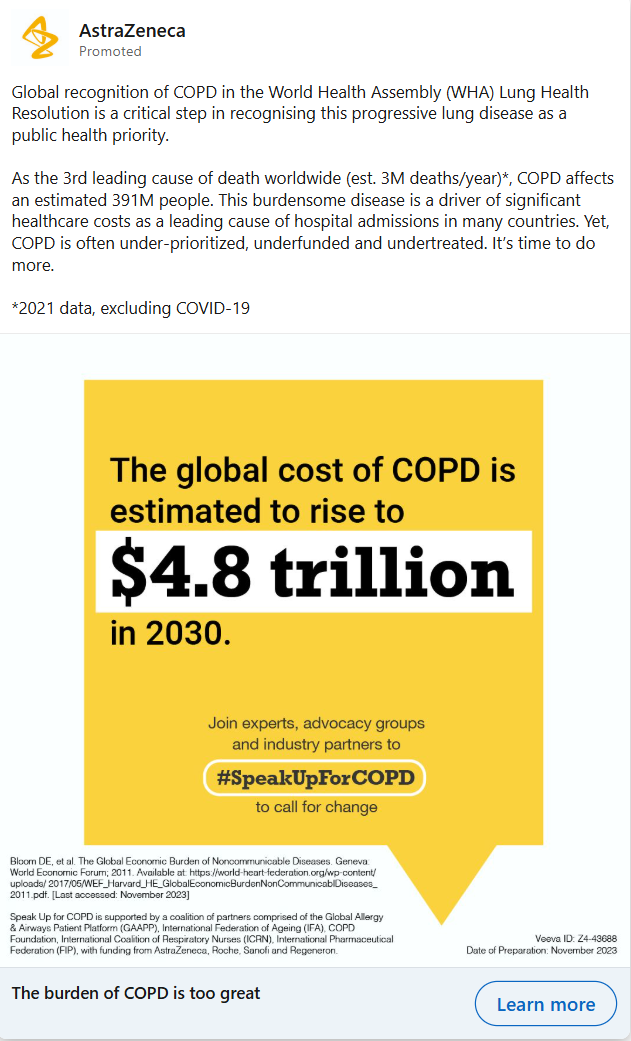
In the ad transparency centre, we can see that recent promoted content on LinkedIn targeted North America, Asia and South America, Europe, Africa, Oceania, Latin America and excludes Saudi Arabia, South Africa and Pakistan, India, Egypt, United Arab Emirates, Brazil. This focused on continued push for a focus on COPD in health policy decisions, driving through to the same website to make a pledge to support.
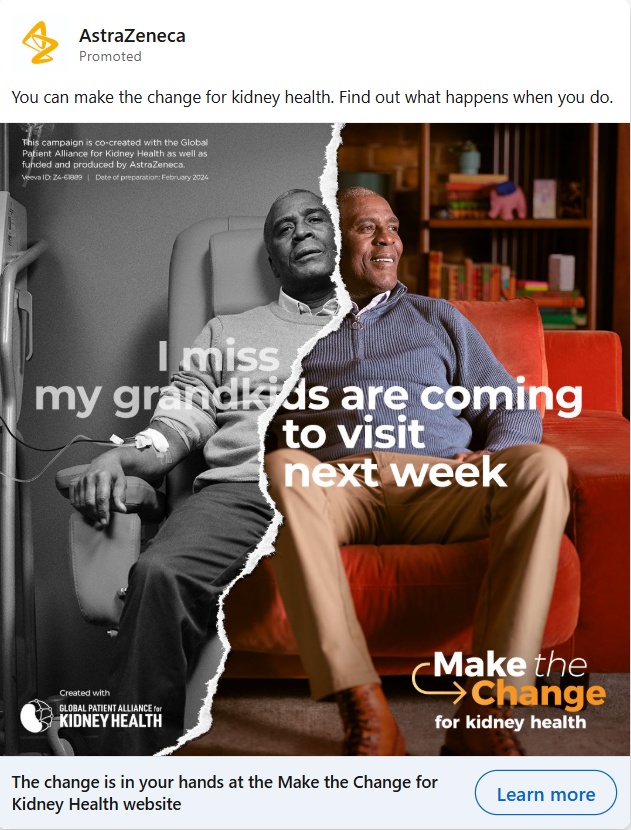
Below is an example of content targeted to policy makers in a range of countries, focused on getting kidney health top of the agenda. AstraZeneca co-created this with a patient advocacy group, driving traffic to the advocacy group's website.
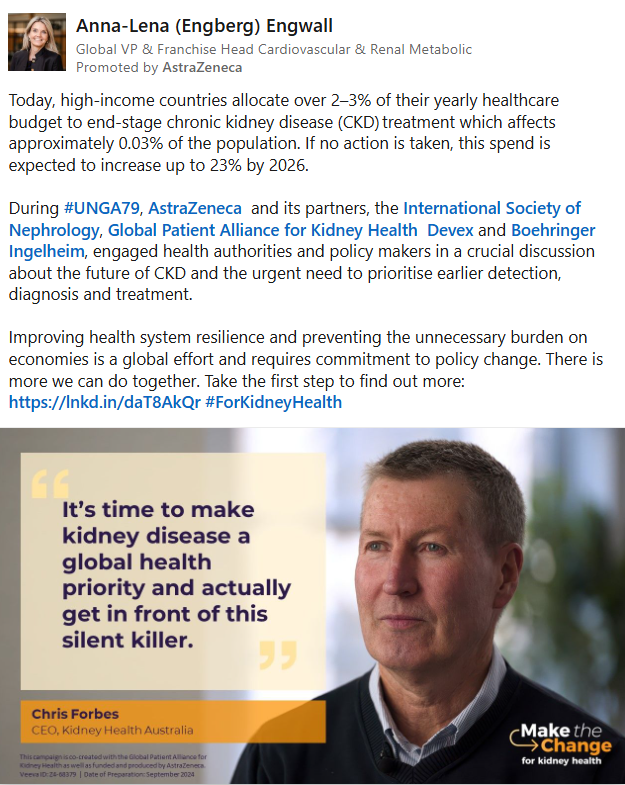
Employees also shared the initiative on LinkedIn, and AstraZeneca amplified employee posts with paid media to increase their reach to the desired target audience. Content shared by employees can be more impactful than the same message from a corporate account, and employees can help spread the word organically. Mobilising employees can therefore be a key tactic. To make sharing easy and reduce concerns about posting the wrong thing, provide employees with pre-approved messages or assets they can use.
Johnson & Johnson have focused on amplifying messaging from their managing director, Joana De Castro, highlighting what's needed to improve access to innovative medicines for Australians.
The Pfizer Australia “Innovation and Access: A Stronger PBS for Australia” initiative calls for reform of the Pharmaceutical Benefits Scheme (PBS) to enable faster and fairer access to innovative medicines for Australians, especially those living with chronic conditions. The content focuses on the desire of Australians to have medicine access improved. The LinkedIn ads drive through to a
website where government and policy makers can access a report on public attitudes towards timely access
to new treatments for chronic diseases 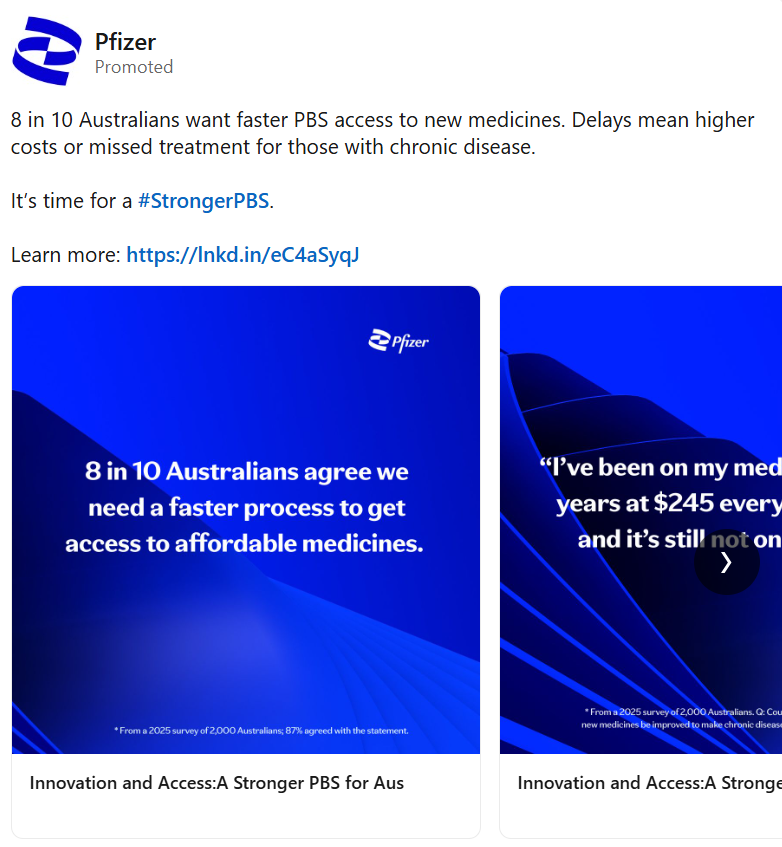
- Health policy audiences are generally quite small, so it’s important to update your content frequently to avoid asset or audience fatigue. See our tips on running paid campaigns to small audiences here.
- Consider how you can include an engagement mechanism, like a virtual pledge, that helps to show the community and social pressure for change.
- Employee voices are often more powerful than a corporate account sharing the same message. Support your employees to share the initiative by providing approved messaging and assets. LinkedIn also allows you to promote employee posts with paid media, which can be a useful feature for amplifying your senior leaders’ messages.